Things to do in Punta del Este: the peninsula on foot, and what needs a bus
Andante notes · 9 min read
Punta del Este splits in two, and not by taste: by distance. Everything most people come to see is less than twenty minutes apart on foot, on the same side of the isthmus. The rest starts thirteen kilometres out and already needs a bus. Whoever does not know that spends the day in a car.

- Where
- Maldonado department, 140 km east of Montevideo
- How long
- The peninsula, one afternoon; with Casapueblo, La Barra and José Ignacio, three days
- Getting there
- Bus from Montevideo, about 2 hours 15
- Getting around
- On foot on the peninsula; local buses for everything else
- Seasons
- Southern hemisphere: January and February are high summer and packed; June to August is winter, empty and with no lifeguards
- Money
- Uruguayan pesos ($U); roughly $U 40 to the US dollar
- Minimum budget
- Zero: almost everything worth seeing is free
- Worth visiting?
- Yes for what you see on foot, and almost all of it is free; January is packed, in winter half of it closes. Month by month
All of this fits in one afternoon, on foot
The peninsula is about two kilometres long and eight hundred metres wide. From Avenida Gorlero, which runs down its spine, it is six minutes on foot to the ocean and eight to the port: you cross from one water to the other without noticing. The paradas, bus stops that work here as street addresses, are numbered outward from the isthmus, so "Parada 1" literally means the beginning of everything.
La Mano
Parada 1 on the Brava
Five concrete fingers coming out of the sand since 1982. It is the photograph everybody takes home from Uruguay, and for almost everybody it is also the end of the visit: one photo and back to the car.
- Entry
- Free, any hour
- Takes
- 15 minutes
La Brava and El Emir
6 minutes from Gorlero
The ocean side: waves, wind and surfboards. El Emir is the beach with people all year round, because it is the one surfers choose. La Brava faces east, so here the sun rises, it does not set.
- Entry
- Free
- Watch out
- No lifeguards out of season
Gorlero and the craft market
The spine of the peninsula
The shopping avenue, and on Plaza Artigas the craft market. Both are under works: the avenue has been widened since August 2026, and on 31 August the market stalls were taken down to build a new pavilion before the season. Meanwhile some of the artisans set up at weekends beside the square.
- Entry
- Free
- When
- Market under works; weekends, beside the square
The port and its sea lions
8 minutes from Gorlero
The sea lions live here all year and you do not have to pay for any excursion to see them: they wait for their share beside the fishing boats, a few metres from the pavement. It is the closest thing to a free show the resort has.
- Entry
- Free
- When
- Early, when the fleet comes back
- Takes
- Half an hour
The lighthouse
13 minutes from the port
Lit since 1860, at the point itself, with the square and the Candelaria church beside it. The square is free and you can walk right up; climbing the tower is another matter: it is not always open and it is no longer free.
- The square
- Free
- Climbing up
- Paid, and not always open
- When
- First and last weekend of each month
La Mansa, at sunset
The other shore, 8 minutes
On the river side the water lies flat and the sun goes down behind Isla Gorriti. This is the sunset shore, and mixing it up with the Brava is the most repeated mistake in the guides: on the Brava, at that hour, the sun is behind your back.
- Entry
- Free
- Where
- Any parada; there is a bandstand at 16
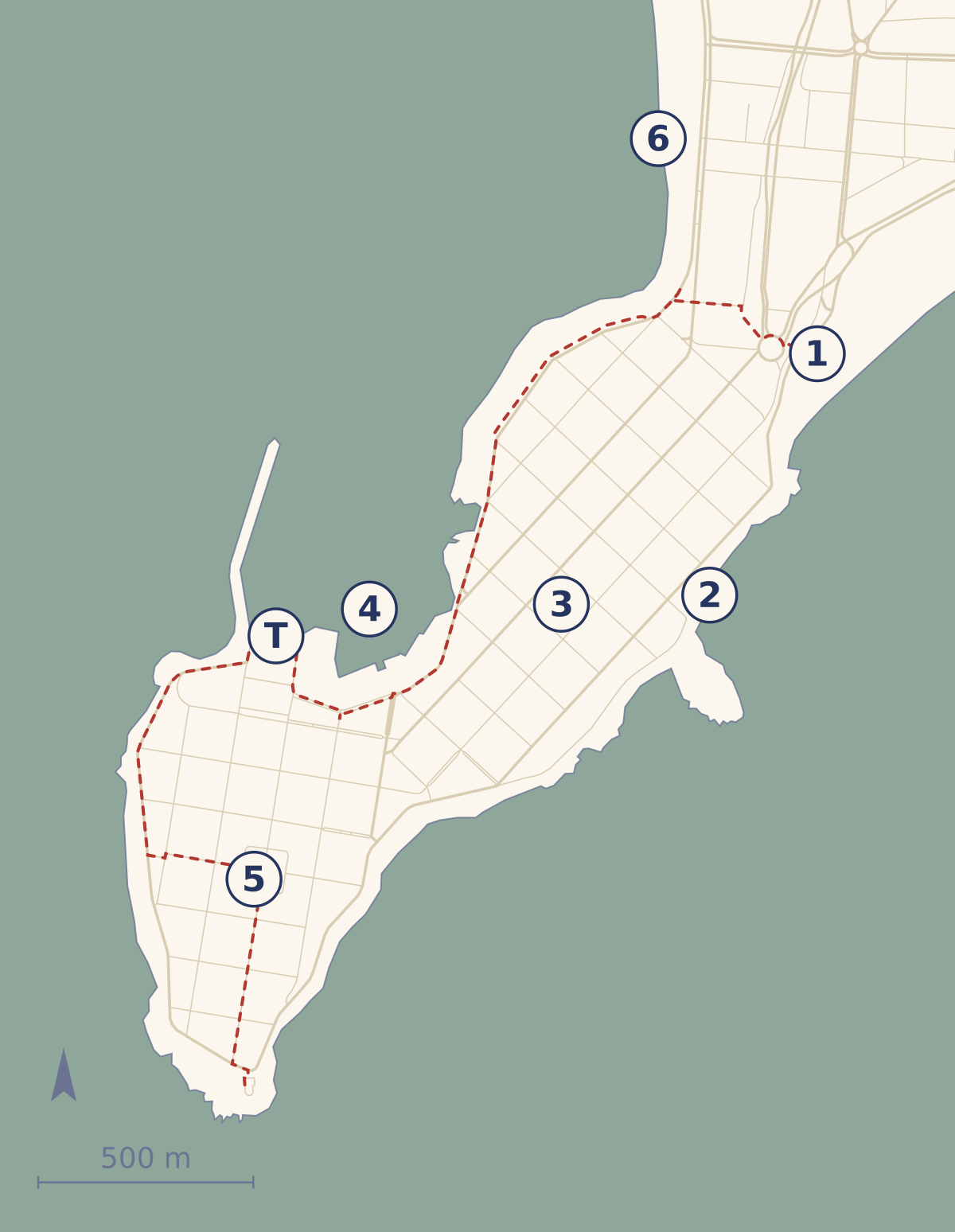
- La Mano, at Parada 1 on the Brava
- La Brava and El Emir, the ocean side
- Gorlero and the Plaza Artigas craft market
- The port and its sea lions
- The lighthouse, at the point of the peninsula
- La Mansa, the river shore, for the sunset
Punta del Este itinerary: 1, 2 and 3 days
Day 1, the peninsula on foot. The list above says what to see; the order is decided by something else. The sea lions live in the port all year, but the movement happens early, when the fishing fleet comes back; and the sun goes down on the Mansa side, on the shore opposite the one La Mano faces. A day put together backwards loses both scenes.
Early: the port
With the fleet coming back
The small fishing boats go out at night and come back around seven; as they unload, the sea lions wait for their share beside them. They are there all day, but at this hour you watch them working rather than sleeping. There is no official time: the fleet sets it.
- Takes
- Half an hour
Mid-morning: La Mano and the Brava
Eight minutes from the port
The Brava faces east: at this hour the sun comes off the sea and falls on the fingers head-on, which is how they are photographed without shooting into the light. From there the coast runs on its own as far as El Emir, and lunch is back at the port.
- Takes
- An hour with the beach
Afternoon: the lighthouse and Gorlero
13 minutes from the port
The point itself: the lighthouse lit since 1860, with the square and the Candelaria beside it. The way back runs along Gorlero, where the craft market opens at 4 pm according to the town hall.
- Takes
- Two unhurried hours
Sunset: La Mansa
8 minutes, across the peninsula
The sun goes down behind Isla Gorriti and the water turns flat. It is the last scene of the day and the one most often got wrong: on the Brava, at this hour, the sun is behind you.
- Takes
- As long as the light lasts
It comes to about four kilometres in all, on foot, without paying entry anywhere.
Day 2, west: Casapueblo and Punta Ballena. Squeezing this into the first day costs you the sunset on the Mansa, the Ceremony to the Sun, or both: they happen at the same hour, on opposite shores, thirteen kilometres apart.
Morning: the bus to Punta Ballena
13 km west · line 8
CODESA's line 8 leaves the Punta del Este terminal and passes Punta Ballena and Casapueblo all year round. There is nothing to book; what to check is the timetable for that day, because the winter one is not the summer one.
- How
- Local bus, no booking
- Watch out
- Not walkable: 13 km along the Ruta Panorámica
Afternoon: Casapueblo
Museum, studio and terraces
The house Carlos Páez Vilaró raised without plans over thirty-six years, today museum, studio, gallery, café and hotel in the same building. An hour covers the museum and the terraces, and it is the only ticket of the day.
- Takes
- An hour, not counting the wait for the sun
- If it rains
- All of it works except the ceremony
Sunset: the Ceremony to the Sun
On the terraces, before the sun goes
Since 1994, every evening the terraces play the recording of Páez Vilaró's voice saying goodbye to the sun. There is no fixed hour: it moves with the season, which is why the whole day is counted backwards from sunset.
- Arrive
- 40 minutes early; the place fills up
- Getting back
- It is dark by then: check the last bus before going up
Day 3, east: La Barra and José Ignacio. One axis and one bus: line 14 crosses the La Barra bridges and carries on to José Ignacio, thirty kilometres further. The 15 and the 55 cover the short stretch, if the plan ends at the bridge.
Morning: the wavy bridges
Across the stream · lines 14, 15 and 55
Two identical parallel bridges over the Maldonado stream: you go over one and come back on the other. The wave is not decoration, it is what holds the deck hanging on cables, and since December 2025 both are a National Historic Monument.
- Entry
- Free
- The first one
- Designed by Leonel Viera; the twin is from 1999
Midday: Ruta 10 and the beaches
Past the bridge
There the road is the main street, with art galleries and antique dealers along it. And there are two waters: the ocean side breaks, which is where the surfers are, at Montoya; on the stream side the water lies still.
- Watch out
- No lifeguards out of season
- If it rains
- The Museo del Mar, the village's own
Afternoon: José Ignacio
35 km east · line 14
A village of thirty-six blocks around a lighthouse from 1877, turned into the luxury address of the Southern Cone. From July to October it is also one of the places where whales are watched from the shore, without a boat.
- Entry
- Free
- In winter
- The village sleeps; the most famous restaurant opens Friday to Sunday
That same route, told out loud while you walk it, is the Andante narrated walk across the peninsula, in Spanish for now.
What already needs a bus or a car
The itinerary above says in what order; this list says what each thing costs, when it opens and what is only reached by boat. Off the peninsula the timetable is worth checking on the day: the CODESA line 14 runs the axis through La Barra, Manantiales and José Ignacio, and out of season it comes round less often.
Casapueblo, at Punta Ballena
13 km west
The inhabitable sculpture Carlos Páez Vilaró raised without plans over thirty-six years. At the end of the day the Ceremony to the Sun is read out in his recorded voice, and that is why people count the visit backwards from sunset.
- Entry
- $U 600 (about US$ 15); residents and over-65s $U 500; under-12s free
- Hours
- Every day of the year, 10 am to sunset
- Ceremony
- 15 minutes before sunset; arrive 40 minutes early
Isla Gorriti
15 minutes by boat from the port
Two beaches, the ruins of Spanish fortifications and woodland, without a single building: it is a reserve and heritage site, nothing gets built. Bring everything, food included, because the beach bar only opens in summer.
- Boat
- $U 500 return; children 3 to 9, $U 400
- Departures
- From 9 am, every half hour
- Takes
- Half a day
Isla de Lobos
12 km out to sea
The largest sea lion colony in South America, around a lighthouse from 1906. You do not land on the island: it is forbidden, and the trip is by sea, around and back. If the point is to see them close up and free, the port already settles it.
- Trip
- US$ 70; under-10s US$ 50
- Departure
- Midday, subject to a minimum of passengers
- Takes
- 2 hours
La Barra
13 km east, line 14
You get there across the wavy bridge over the Maldonado stream, which lifts your stomach on purpose. On the other side, the village that in January is the nightlife of the resort and in July is a quiet road beside the water.
- Entry
- Free
- Watch out
- Almost everything after dark is seasonal
The MACA, at Manantiales
Route 104, km 4.5
Forty hectares belonging to the Pablo Atchugarry foundation, with galleries, a chapel and an open-air sculpture park. It opens almost all year and charges nothing, which makes it the best winter and rainy-day plan in the area.
- Entry
- Free
- Hours
- Wednesday to Monday, 10 am to 6 pm; closed Tuesdays

What it costs to see Punta del Este
Punta del Este has a reputation as an expensive resort, and in hotels and restaurants it earns that reputation. The list of what you must pay to look at it, on the other hand, fits in five lines, and four of them are optional.
- Climbing the lighthouse
- Paid; ask on the spot
- Boat to Gorriti
- $U 500 return
- Casapueblo
- $U 600, under-12s free
- Trip around Isla de Lobos
- US$ 70
- Everything else in this note
- 0
La Mano, both beaches, the port with its sea lions, the lighthouse square, the craft market, Parque El Jagüel, the MACA and the sunsets on the Mansa cost nothing. Not even parking: paid parking has been announced for the summer of 2027, not before.
The prices above are from August 2026 and are published by the places themselves, so it is worth confirming them the same day on their own pages instead of trusting a figure written months ago in any guide, this one included.

Punta del Este in winter
Here winter runs from June to August, and the resort changes trade: guides written as if it were always January send people at closed doors. What to know before coming:
There are no lifeguards on any beach. The service runs from mid-November to early April; the rest of the year the coast is unwatched.
- The water sits around 12 degrees. That is not "fresh": that is wetsuit temperature.
- The Ralli Museum does not open. Its official calendar runs October to May, and June, July and August are not on it. Several guides still recommend it as a winter plan.
- Part of the restaurant trade opens weekends only, and after Easter week some hotels close until the next season. Booking dinner on a Friday or Saturday stops being a luxury.
- Wind is part of winter here, even on a sunny day. Mornings pay off better than afternoons.
In exchange there is something January does not have: between July and October the southern right whales pass, and they are watched from the shore, without a boat and without paying anything.
They are watched from Punta Ballena, from the José Ignacio lighthouse and from the Brava promenade itself, where at Parada 36 there is a whale sculpture made from the iron of the demolished San Rafael hotel. The signal to look for is the blow, which comes up in a V.
What to do in Punta del Este when it rains
The indoor plan is shorter than it looks, but it exists and it is good. Casapueblo opens every day of the year and has galleries and a screening room, so it works whole except for the ceremony, which needs a visible sun. The MACA opens Wednesday to Monday, free, and the Ralli Museum, five kilometres away, charges nothing either and opens in the afternoon. There are three cinemas, one of them on the peninsula itself, on Calle 27. And there is the casino, which never closes.
What there is not, however much of the internet suggests otherwise, is an aquarium or hot springs: the Uruguayan hot springs are five hundred kilometres away, on the other side of the country.
Punta del Este with kids
Three things work without argument and two of them are free. Parque El Jagüel, ten minutes from the peninsula, has big playgrounds, a helicopter and a real pirate ship to climb, and opens all year from 10 am to 6 pm, closed Tuesdays for maintenance. The sea lions at the port are seen close up with no boat and no ticket. And Isla Gorriti is half a day of calm beach with a fifteen-minute crossing, which for a child is already half the outing.
Getting around Punta del Este without a car
From Montevideo it is about two hours fifteen by bus, with frequent departures through the day. Within the area, the CODESA lines cover the axis from Maldonado to José Ignacio by way of the peninsula, La Barra and Manantiales; out of season the frequency drops a good deal, so the timetable is checked on the day.
From 1 November 2026 the intercity buses stop entering the Punta del Este terminal.
It is not in any guide yet. They now end their run at the Maldonado terminal, five kilometres away, and smaller vehicles carry passengers on to the peninsula at no extra charge; the date carries a declared margin of fifteen days. The Punta del Este terminal is not closing. Anyone arriving after that date will get off somewhere other than the pages written earlier say.
Questions that keep coming up
What can you do in Punta del Este in one day?
The whole peninsula is walked in one afternoon: La Mano at Parada 1 on the Brava, Avenida Gorlero, the port with its sea lions, the lighthouse, and the sunset from the Mansa. It comes to about four kilometres in all and needs no car.
Is Punta del Este worth visiting?
For a day or two, yes, and cheaply: almost everything people come to see is free to look at. What it is not is a place to be driven around for a week - the peninsula is two kilometres long, and one afternoon on foot covers it.
What is free in Punta del Este?
Almost everything people come to see: La Mano, both beaches, the port and its sea lions, the lighthouse square, the craft market on Plaza Artigas, Parque El Jagüel and the sunsets on the Mansa. You pay only to climb the lighthouse, for the boat to Isla Gorriti and for entry to Casapueblo.
Is Punta del Este worth it in winter?
It is, if you know what you are coming for. From June to August there are no lifeguards on any beach, the water sits around 12 degrees and part of the restaurant trade opens weekends only. In exchange the southern right whales pass between July and October, watched from the shore without a boat, and the peninsula is empty.
How much does Casapueblo cost?
General entry is $U 600, about US$ 15; residents and over-65s pay $U 500 and under-12s go free. The museum opens every day of the year, from 10 in the morning until sunset, and the Ceremony to the Sun starts fifteen minutes before the sun goes.
How many days do you need in Punta del Este?
One is enough for the peninsula: about four kilometres in all, done in one long afternoon. Casapueblo and Punta Ballena ask for a second day, La Barra and José Ignacio for a third. All three are done by local bus, without a car.
Can you visit Punta del Este without a car?
On the peninsula, yes; there a car is a nuisance. For Casapueblo, La Barra and José Ignacio there are bus lines that work well in season and less often in winter. A car only becomes necessary if the plan includes wineries or the far beaches.
Can you swim on both beaches?
La Mansa is the still one with a gentle slope, the one families choose. La Brava is oceanic and has a current: even in season there is a long stretch with no lifeguards. Out of season there is no service on either.
What is the best time of day?
Early morning for the Brava and La Mano, because the sun comes off the sea and nobody is there yet. Late afternoon for the Mansa and the port, which is when the sun goes down behind Isla Gorriti.
The peninsula walks itself. Told, it is another thing
This note is enough not to get lost. What it does not tell you is why the port is where it is, what stood on the Mansa when this was a fishing village, and who decided to build the first hotel out on the point. That is "The other Punta del Este": a narrated walk that starts at La Mano and follows the peninsula, told by Graciela, who was born here. The story moves with where you are: if you stop to look, it waits.
One hour · 3.8 km · no app, it opens in the browser · no group and no schedule · $U 199 ≈ US$ 5 · narrated in Spanish
Photos: Jimmy Baikovicius (CC BY-SA 2.0) · Marcelo Campi (CC BY-SA 2.0) · Rosina Peixoto (CC BY-SA 4.0)
.jpg)
.jpg)
